Beyond Fiordland: Heritage Adventurer
Southern New Zealand
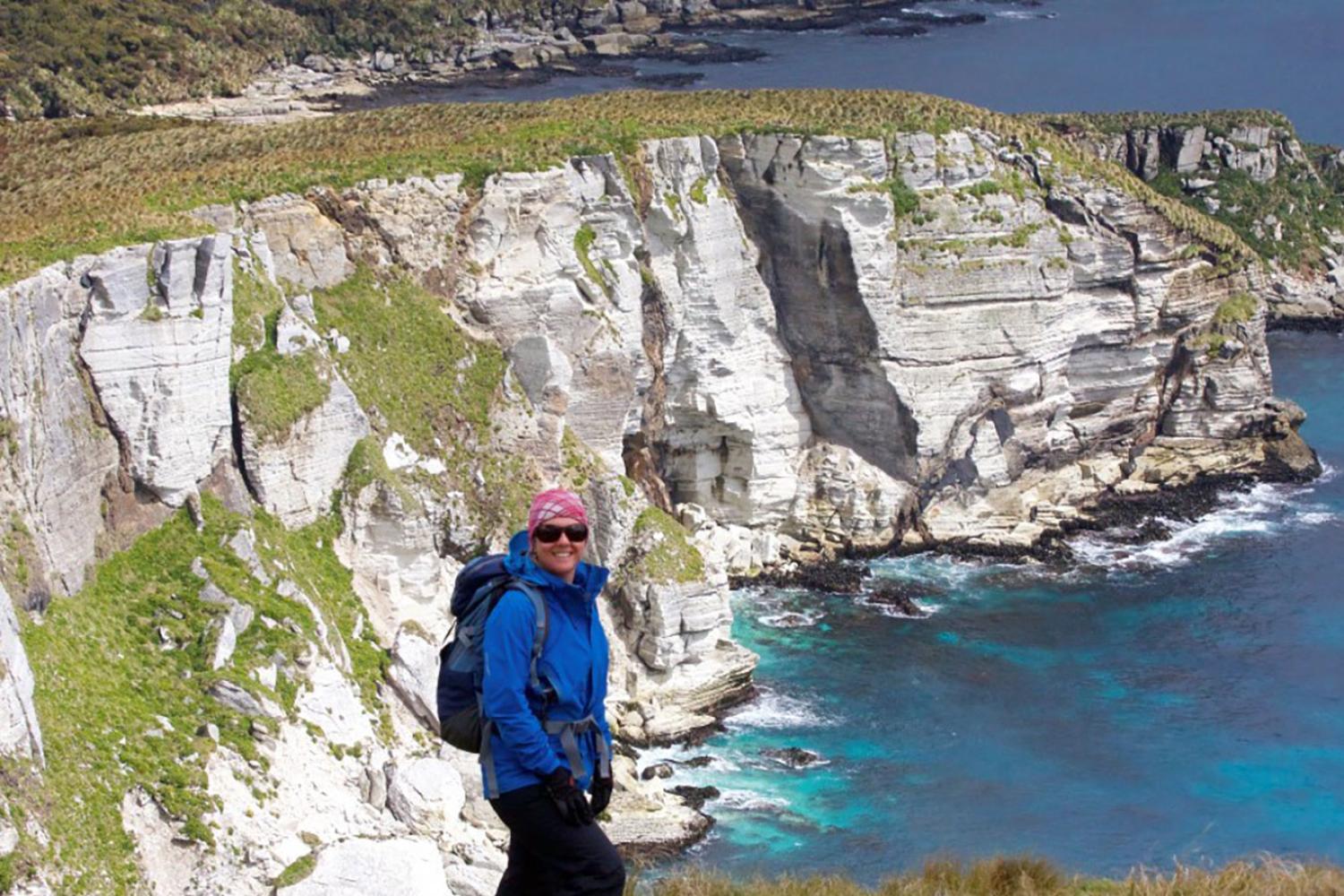
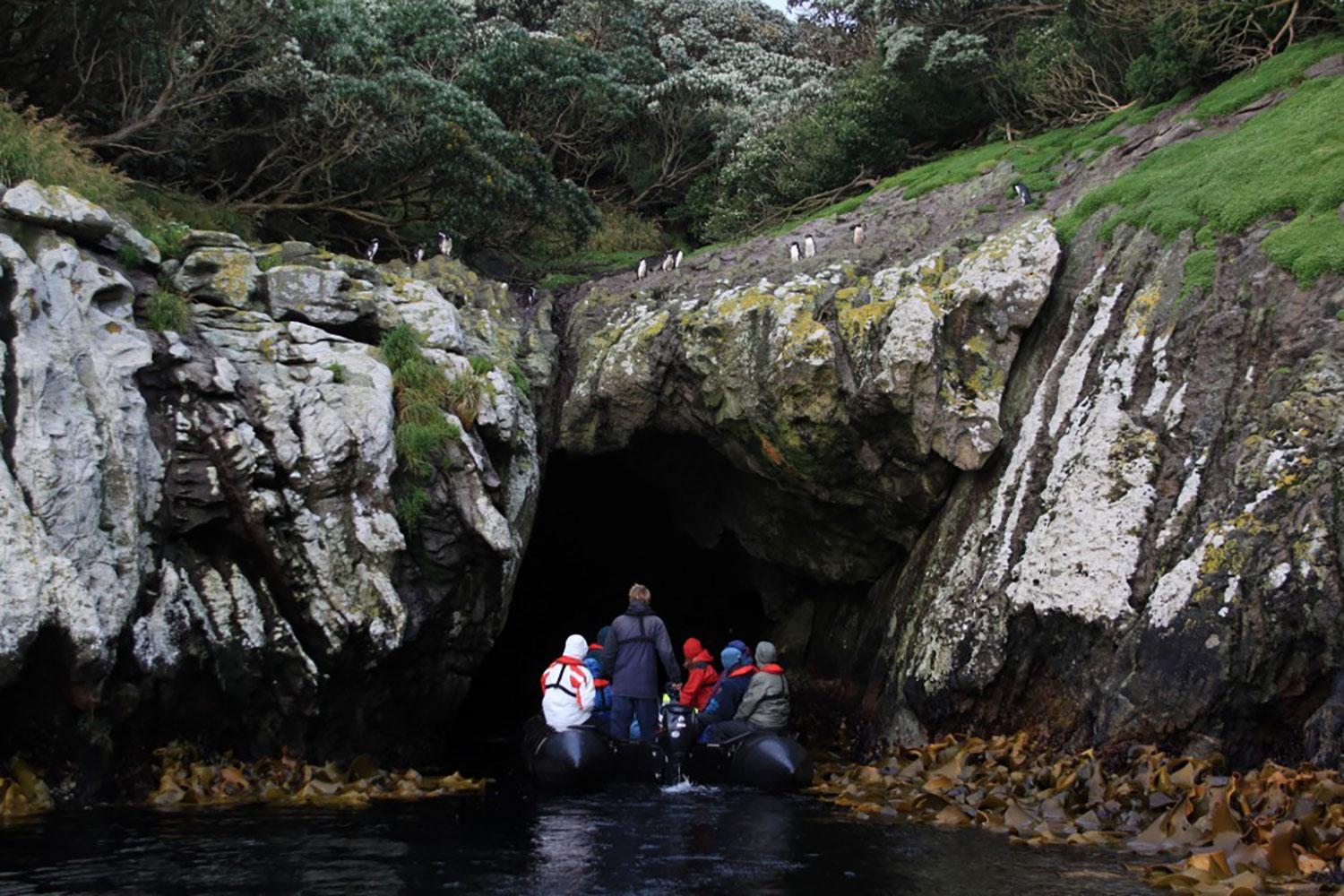
Embark on an extraordinary voyage to one of the most remote wildernesses on Earth—this expedition takes you through the dramatic fjords of Fiordland National Park and onward to the untouched sub-Antarctic islands of New Zealand’s wild south. As part of this small-ship expedition you’ll Zodiac cruise among towering cliffs, land on predator-free shores and witness seabird colonies, albatross, sea lions and endemic species thriving in isolation. This journey offers the ultimate immersion into remote nature, wildlife and dramatic island landscapes
Highlights
- Explore Fiordland’s ice-carved mountains, rainforest and hidden fjords far from the crowds.
- Visit sub-Antarctic islands such as The Snares, Auckland and Campbell—UNESCO-listed wilderness.
- Observe seabirds in massive colonies, Southern Royal Albatrosses, endemic teal and sea lions ashore.
- Zodiac cruises through rugged coastal waters and landings on remote islands allow intimate nature access.
- Small-ship expedition style with expert guides, focused on wildlife, birding and conservation-rich travel.
Tick this once in a lifetime experience off your travel bucket list; explore remote parts of New Zealand's Southern region, an area known for its range of birdlife and jaw dropping scenery on a grand scale.
The Subantarctic Islands are the wildlife and history rich regions of Southern New Zealand, they are impossible to visit without an expedition like this. They are not mentioned in a travel brochure on your high street; and rarely will you find them listed in guidebooks, few people have been to them and they don't even appear on some maps of the South Pacific. Despite their low profile, they are among the most remarkable wildlife reserves in the New Zealand, designated UNESCO World Heritage sites and afforded the highest protection of any nature reserves in New Zealand. Remote, uninhabited and on no regular shipping route, access is further restricted by a strict Management Plan which limits the number of people allowed ashore each year.
Please note: The 27 December 2026 voyage includes a hotel night in Invercargill instead of Queenstown. Guests should make their way to the designated hotel in Invercargill where we will spend the first night of the expedition, or join our 3pm Queenstown transfer from a designated meeting point to Invercargill.
Stewart's Take
Exploring New Zealand's Remote Backyard!
Overview
Embark on an extraordinary voyage to one of the most remote wildernesses on Earth—this expedition takes you through the dramatic fjords of Fiordland National Park and onward to the untouched sub-Antarctic islands of New Zealand’s wild south. As part of this small-ship expedition you’ll Zodiac cruise among towering cliffs, land on predator-free shores and witness seabird colonies, albatross, sea lions and endemic species thriving in isolation. This journey offers the ultimate immersion into remote nature, wildlife and dramatic island landscapes




Itinerary
Day 1: Queenstown Guests should make their way to the designated hotel where we will spend the first night of the expedition. This evening there will be an informal get-together at the hotel for dinner; an excellent opportunity to meet fellow adventurers on your voyage and some of our expedition team. Please note: The 27 December 2026 voyage includes a hotel night in Invercargill instead of Queenstown. Guests should make their way to the designated hotel in Invercargill where we will spend the first night of the expedition, or join our 3pm Queenstown transfer from a designated meeting point to Invercargill. Day 2: Port of Bluff Today we enjoy breakfast in the hotel restaurant and have the morning free to explore Queenstown before returning to the hotel for lunch and departing for the Port of Bluff to embark your ship. You will have time to settle into your cabin and familarise yourself with the ship; we will also take the opportunity to conduct a number of safety briefings. You are invited to join the expedition team in the Observation Lounge and up on the Observation Deck as we set our course to Campbell Island and our adventure begins. We will sail past Ruapuke Island, formerly a local Maori stronghold supporting a population of over 200 people. We will also be able to see Stewart Island. Despite appearing quite small on most maps it is really quite large and has a 700 kilometre coastline. Seabirds that we may encounter at this early point in the voyage include: albatross, petrels, cormorants, gulls and Little Blue Penguins. Day 3: At Sea As we make our way through the Southern Ocean we take the opportunity to learn more about the flora and fauna as we prepare for our arrival at Campbell Island. En route there are great birding opportunities which may include the Wandering Albatross, Royal Albatross, Black-browed Albatross, Light-mantled Sooty Albatross, Salvin’s Albatross, Campbell Island Albatross, Northern and Southern Giant Petrel, Sooty Shearwater and Little Shearwater. There should be plenty of petrels and again the hard to identify prion species. We can expect some of the best pelagic birding on this leg of the journey from Bluff to Campbell Island with great views during the crossing. Day 4: Campbell Island We have a full day to explore Campbell Island, New Zealand’s southernmost Subantarctic territory. Its history is as rich and varied as the other islands we visit. Discovered in 1810, it was soon occupied by sealers who introduced rats and cats. Farming followed from 1895 to 1934 when it was abandoned. Coastwatchers were stationed on the island during the war and at the end of the war the station was taken over by the New Zealand Metrological service. They maintained a manned weather/ research station there until 1995. In the early 1970s the removal of farm animals commenced and all were eventually removed by 1990. The vegetation recovered quickly and the cats died out naturally. In a very ambitious (and never before attempted on such a large scale) eradication programme the New Zealand Department of Conservation successfully removed the rats. With the island declared predator free, the way was clear to reintroduce the endangered Campbell Island Flightless Teal, which had been rediscovered on an offshore island in 1975. Snipe, which were formerly unknown from the island but were discovered on another offshore island, recolonised the islands themselves. The vegetation which the great English botanist Sir Joseph Hooker described in 1841 as having a “Flora display second to none outside the tropics” is flourishing and is nothing short of spectacular. We will offer a number of options which will enable you to explore the island including an extended walk to Northwest Bay. There will also be an easier walk to the Col Lyall Saddle. All of these options will allow you the opportunity and time to enjoy the Southern Royal Albatross which nest here in large numbers. We also visit areas of the island which contain outstanding examples of the megaherbs for which the island is renowned. Day 5: Auckland Islands – Carnley Harbour In the south of the archipelago there is a very large sheltered harbour rich in human history including shipwrecks, treasure hunters, Coastwatchers and, of course, scientific parties. We plan to arrive mid-morning entering the harbour through the eastern entrance which is guarded on both sides by dramatic cliffs and rugged, tussock-covered hills. Our activities here today are weather dependent. We have a number of options. If the weather is fine there will be an opportunity for the more energetic expeditioners to climb to the South West Cape and visit the Shy Mollymawk colony. This climb provides magnificent views in all directions, especially over the western entrance to Carnley Harbour, Adams Island and Western Harbour. For those not making the climb there will be an opportunity to Zodiac cruise along the coast of Adams Island, Western Harbour and Victoria Passage. Other options include the Tagua Bay Coastwatcher’s hut and lookout which was occupied during the Second World War. We could visit Epigwatt and the remains of the ‘Grafton’ which was wrecked here in 1864. All five men aboard survived and lived here for 18 months before sailing their modified dinghy to New Zealand to get help. Two of the survivors wrote books about their ordeal, their first-hand accounts tell us a lot about their time here. Later this evening we will sail up the eastern coast, making our way to Port Ross in preparation for our landing at Enderby Island. Day 6: Auckland Islands – Enderby Island The Auckland Islands group was formed by two volcanoes which erupted some 10-25 million years ago. They have subsequently been eroded and dissected by glaciation creating the archipelago as we know it today. Enderby Island is one of the most beautiful islands in this group and is named after the same distinguished shipping family as one of our previous vessels. This northern most island in the archipelago is an outstanding wildlife and birding location and is relatively easy to land on and walk around. The island was cleared of all introduced animals (pests) in 1994 and both birds and the vegetation, especially the herbaceous plants, are recovering both in numbers and diversity. Our plan is to land at Sandy Bay, one of three breeding areas in the Auckland Islands for the Hooker’s or New Zealand Sea Lion, a rare member of the seal family. Beachmaster bulls gather on the beach, defending their harems from younger (ambitious) males, to mate with the cows shortly after they have given birth to a single pup. Hooker’s or New Zealand Sea Lion numbers are in a slow decline, for reasons which are not obvious but most probably connected with a nearby squid fishery. During our day ashore there will be several options, some longer walks, some shorter walks and time enjoying the wildlife. The walking is relatively easy. A boardwalk traverses the island to the dramatic western cliffs, from there we follow the coast and circumnavigate the island. Birds that we are likely to encounter include the following species: Southern Royal Albatross, Northern Giant Petrel, Auckland Island Shag, Auckland Island Flightless Teal, Auckland Island Banded Dotterel, Auckland Island Tomtit, Bellbird, Pipit, Red-crowned Parakeet, Yellow-eyed Penguin and Light-mantled Sooty Albatross. There is also a very good chance of seeing the Subantarctic Snipe. Other more common species we will see include the Goldfinch, Song Thrush, Blackbird, European Starling, Red-billed Gull and Redpoll. On Derry Castle Reef we will look for migratory waders which could include Bar-tailed Godwit, Turnstone and possibly vagrants. Day 7: The Snares – North East Island The closest Subantarctic Islands to New Zealand, they were appropriately called The Snares as they were once considered a hazard for sailing ships. Comprising of two main islands and a group of five islands called the Western Chain; they are uninhabited and enjoy the highest protection as Nature Reserves. It is claimed by some that these islands are home to more nesting seabirds than all of the British Isles together. We plan to arrive in the morning, and as landings are not permitted, we will Zodiac cruise along the sheltered eastern side of the main island if the weather and sea conditions are suitable. In the sheltered bays, we should see the endemic Snares Crested Penguin, Snares Island Tomtit and Fernbirds. There are hundreds of thousands of Sooty Shearwaters nesting on The Snares; the actual number is much debated. Buller’s Albatross breed here from early January onwards. There will be opportunities to view the forests of large tree daisy Olearia lyallii which forms a canopy over much of the island group. Day 8: Stewart Island – Paterson Inlet/Ulva Island New Zealand’s third island is well off the usual beaten tourist track. It is a wonderfully tranquil place; the scenery of untouched bushland is stunning. We will enjoy a morning exploring Ulva Island which is rich in history and wildlife, being a predator-free island from 1997 the bird song and wildlife is some of the best. In Paterson Inlet you will have time to explore the sandy beaches of Boulder Bay and West End Beach or just enjoy some time around Post Offce Bay and Sydney Cove. Some of the wildlife you may get to see while walking the tracks on Ulva Island include Stewart Island Robin, Stewart Island Weka, South Island Kaka, Kereru (wood pigeon), Mohua (yellowhead), Red Crowned Parakeet, Fantail, Bellbird, Tui and Southern Brown Kiwi. There are many more species that may also be seen, our knowledgeable expedition guides will be listening for bird calls and keeping a close watch in overhead canopies and the surrounding shrubs to identify further species. In the afternoon we turn our attention to other parts of Paterson Inlet and visit the historic Norwegian whaling station in Prices Inlet and Kaipipi Bay, where from 1923 and 1933 the Ross Sea Whaling Company of Sandefjord, Norway ran a repair base in Prices Inlet where chaser boats were serviced in preparation for the Antarctic summer. There may be an opportunity to explore quirky town centre Oban in Halfmoon Bay where a drink with a view can be enjoyed at the iconic South Sea Hotel. Days 9 to 11: Fiordland We have three days to explore the incredible wilderness of fiords in the south-west corner of the South Island. This is an area rich in history, majestic scenery and abundant in wildlife. Fiordland was well known to local Maori people, with the demi-god Tu-teraki-whanoa being said to have used his adze, Te Hamo, to carve out the region’s fiords. Captain Cook and his crew landed here on HMS Resolution in 1773, they were the first Europeans to visit Fiordland, subsequently spending five weeks in Dusky Sound. Cook’s records of his discovery and maps attracted sealers and whalers not long after who then formed the first European settlements of New Zealand, historically this region is very important and shaped the future of the country. Fiordland’s coast is only accessible by sea, making it the most remote region of New Zealand’s mainland. Waterfalls, streams, rivers and fiords are enveloped with misty veils that come and go, revealing steep gradients of mountain peaks and sheltered valleys. A rugged terrain, the thickly forested floors are covered with ferns, lichens and mosses. Bottlenose Dolphins, Fiordland Crested Penguins and Little Penguins are all residents of the fiords; during our time here we will look out for them. Our schedule gives us the flexibility to visit as much as possible, areas we plan to visit during our time in Fiordland include Doubtful Sound, Dusky Sound and Acheron Passage, Astronomer’s Point and Pickersgill Harbour. Our final plan will be determined by the weather. The Captain and Expedition Leader will work hard to make the best use of our time in this incredible region of New Zealand, including areas that even few New Zealanders have visited. The isolation of Fiordland has been beneficial because its beauty remains unspoiled and its historic sites undisturbed. During our time in Dusky Sound there will be the opportunity to experience an unforgettable helicopter flight through the Sound swooping down alongside Cooper Island and Cook Channel with a landing on Mt Pender where spectacular vistas across constellations of islands stretching into the horizon and dotting the winding fiords can be enjoyed. On the evening of Day 11 we will enjoy a celebratory dinner with newfound friends and reflect on a wealth of new experiences from our adventure. Day 12: Invercargill/Queenstown Early this morning we will arrive in the Port of Bluff. After a final breakfast we bid farewell to our fellow voyagers and take a complimentary coach transfer to either Invercargill or Queenstown Airports. In case of unexpected delays due to weather and/or port operations we ask you not to book any onward travel until after midday from Invercargill and after 3pm from Queenstown. Note: During our voyage, circumstances may make it necessary or desirable to deviate from the proposed itinerary. This can include poor weather and opportunities for making unplanned excursions. Your Expedition Leader will keep you fully informed. Landings at the Subantarctic Islands of New Zealand are by permit only as administered by the Government of New Zealand. No landings are permitted at The Snares.Scrolling is disabled on map, please click to enable.
Vessel
Luxury Expedition Vessel: Heritage Adventurer
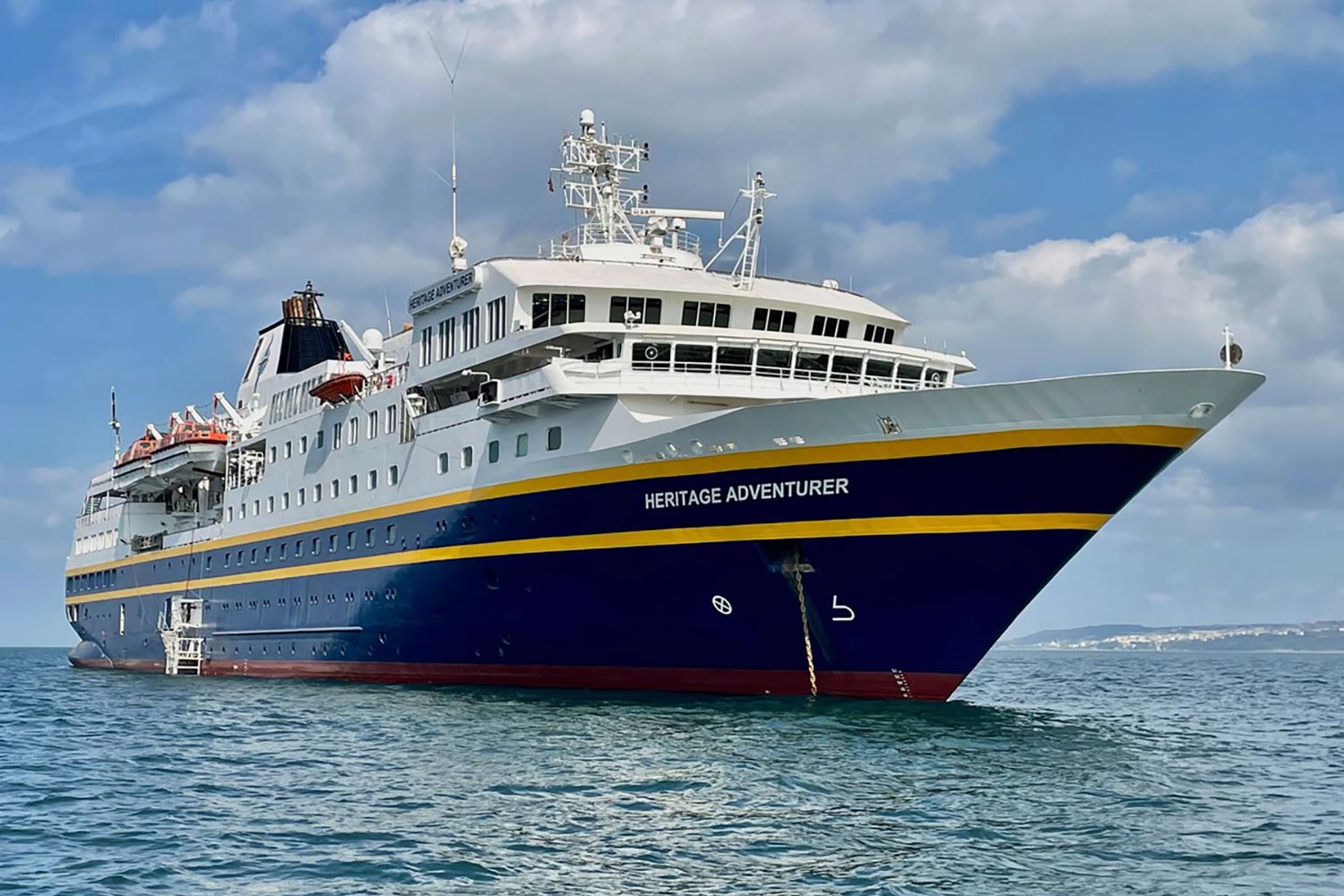
The purpose built polar expedition vessel Heritage Adventurer provides a most capable, safe, and exclusive expedition cruise experience. Heritage Adventurer is a true pioneering expedition vessel of exceptional pedigree. Often referred to as the 'Grande Dame of Exploration Cruising' due to her celebrated history and refined design, she was purposebuilt for adventure in 1991 at Finland's Rauma shipyard and specifically designed for Polar exploration.
Setting a peerless standard in authentic expedition travel, Heritage Adventurer (formerly known as MS Hanseatic) combines the highest passenger ship iceclass rating (1A Super) with an impressive history of Polar exploration. She held records for the most northern and southern Arctic and Antarctic navigations, and for traversing both the Northwest and Northeast Passages. Originally designed to accommodate 184 guests, Heritage Adventurer now welcomes just 140 expeditioners ensuring spacious, stylish and comfortable voyages, while a fleet of 14 Zodiacs ensures all guests are able to maximise their expedition adventure.
Booking Information
Essential Information
Deposits
- Reservations require a deposit of 25% at the time you receive a booking confirmation from Expeditions Online. A payment link will be sent to you and this may be paid by major credit card. Bookings within 90 days of departure require full payment.
Final Payments
- Balances are due 90 days prior to departure.
Cancellations
- All requests for cancellation must be received in writing to Expeditions Online. Cancellations received 180 days or more prior to departure, are refunded less a $US750.00 per person administration fee. For cancellations received within 179 and 91 days of the embarkation date the full deposit will be forfeited. If cancellation occurs within 90 days prior to the departure date the total price is forfeited. If cancellation occurs within 90 days and full payment has not yet been received, the total price will still apply and any unpaid monies are due immediately. We strongly recommend that you obtain adequate trip cancellation insurance.
Booking Terms
- Please read carefully the General Booking Conditions for Expeditions Online. This voyage is operated by Heritage Expeditions and you additionally travel under their terms and conditions as the operator as well as of the Shipping Company/transport carrier. Details will be forwarded to you at the time of booking
Included
Pre/post cruise transfers, one night hotel accommodation in a twin share room (incl. dinner/breakfast), all on board ship accommodation with meals, house beer, wine and soft drinks with lunch and dinner and all expedition shore excursions. Programme of lectures by noted naturalists. Pricing per personExcluded
All items of a personal nature, laundry, drinks, gratuities, helicopter excursion. International/domestic flights, visas and travel insurance
Tour Dossier
Beyond Fiordland: Heritage Adventurer
A rare and special expedition to New Zealand's sub-Antarctic Islands, Stewart Island and wild Fiordland, with unique birdlife and mammals
File Creation date: 2025-12-13 - for updated information and dates and prices see the following page:
http://expeditionsonline.com/tour/beyond-fiordland-heritage-adventurer_385
Beyond Fiordland: Heritage Adventurer
Duration: 12 days
Location: Southern New Zealand
Available: December-January
Start: Queenstown, New Zealand
Finish: Queenstown or Invercargill, New Zealand
Highlights
- Explore Fiordland’s ice-carved mountains, rainforest and hidden fjords far from the crowds.
- Visit sub-Antarctic islands such as The Snares, Auckland and Campbell—UNESCO-listed wilderness.
- Observe seabirds in massive colonies, Southern Royal Albatrosses, endemic teal and sea lions ashore.
- Zodiac cruises through rugged coastal waters and landings on remote islands allow intimate nature access.
- Small-ship expedition style with expert guides, focused on wildlife, birding and conservation-rich travel.
Itinerary
Embark on an extraordinary voyage to one of the most remote wildernesses on Earth—this expedition takes you through the dramatic fjords of Fiordland National Park and onward to the untouched sub-Antarctic islands of New Zealand’s wild south. As part of this small-ship expedition you’ll Zodiac cruise among towering cliffs, land on predator-free shores and witness seabird colonies, albatross, sea lions and endemic species thriving in isolation. This journey offers the ultimate immersion into remote nature, wildlife and dramatic island landscapes
Ship Information
Luxury Expedition Vessel: Heritage Adventurer
The purpose built polar expedition vessel Heritage Adventurer provides a most capable, safe, and exclusive expedition cruise experience. Heritage Adventurer is a true pioneering expedition vessel of exceptional pedigree. Often referred to as the 'Grande Dame of Exploration Cruising' due to her celebrated history and refined design, she was purposebuilt for adventure in 1991 at Finland's Rauma shipyard and specifically designed for Polar exploration.
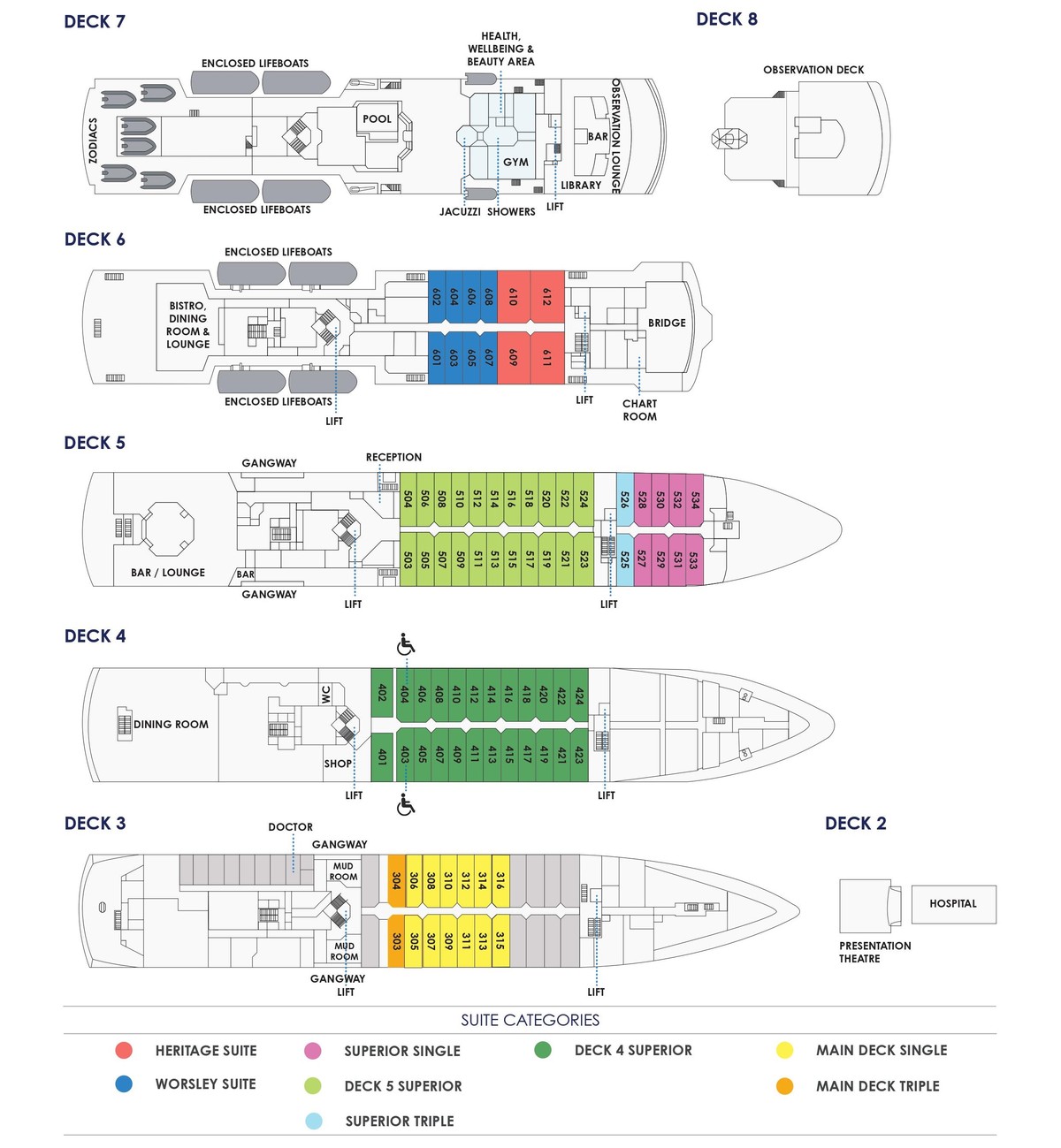
Setting a peerless standard in authentic expedition travel, Heritage Adventurer (formerly known as MS Hanseatic) combines the highest passenger ship iceclass rating (1A Super) with an impressive history of Polar exploration. She held records for the most northern and southern Arctic and Antarctic navigations, and for traversing both the Northwest and Northeast Passages. Originally designed to accommodate 184 guests, Heritage Adventurer now welcomes just 140 expeditioners ensuring spacious, stylish and comfortable voyages, while a fleet of 14 Zodiacs ensures all guests are able to maximise their expedition adventure.
Beyond Fiordland: Heritage Adventurer
For the latest, up-to-date departure dates and prices please refer to the tour page:
http://expeditionsonline.com/tour/beyond-fiordland-heritage-adventurer_385
Included
Pre/post cruise transfers, one night hotel accommodation in a twin share room (incl. dinner/breakfast), all on board ship accommodation with meals, house beer, wine and soft drinks with lunch and dinner and all expedition shore excursions. Programme of lectures by noted naturalists. Pricing per personExcluded
All items of a personal nature, laundry, drinks, gratuities, helicopter excursion. International/domestic flights, visas and travel insurance
General Terms and Conditions
BOOKING ENQUIRIES:
Expeditions Online Newsletter
Sign up to be an Expeditions Online insider and receive info on exclusive deals, discounts and more!